


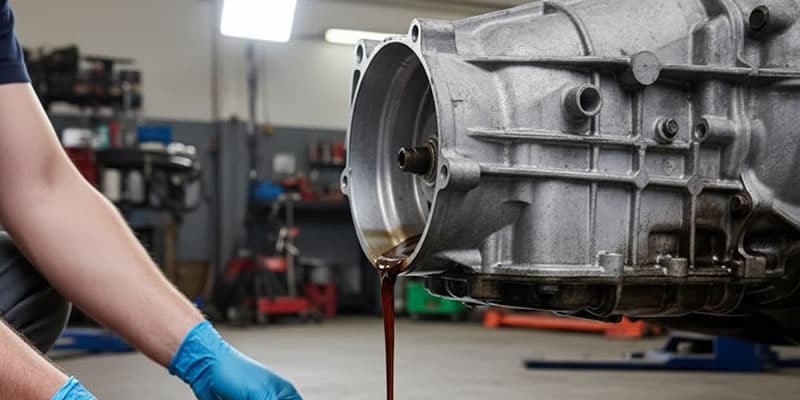
Not every vibration or harsh gear change means the gearbox needs replacing. But when slipping is constant under acceleration, gear changes produce severe jolts, or the gearbox fluid smells burnt, it is no longer a minor adjustment: the transmission system is suffering internal damage that should be diagnosed as soon as possible.
Main warning signs
- Slipping. The engine revs when pressing the accelerator, but the car does not gain speed proportionally. It is one of the clearest symptoms of wear on the clutch discs or the automatic gearbox's internal clutch packs.
- Jolts or jerks. A noticeable impact when moving the lever to Drive (D) or Reverse (R), or when changing between gears, usually points to a problem with the solenoids, the valve body, or the torque converter.
- Delayed response. Several seconds pass between applying the gear change and the vehicle reacting, a sign of low hydraulic pressure in the system.
- Metallic noises. Whining, rumbling, or grinding sounds that increase with acceleration indicate wear in gears, bearings, or synchromesh rings.
- Warning lights on. The Check Engine light or the specific transmission indicator on the dashboard confirm that the ECU has detected a fault, although a scanner diagnosis is still needed to identify which one.
.jpg)
What the condition of the transmission fluid reveals
The gearbox oil is one of the most reliable indicators of the system's internal condition, and it can be checked without needing to disassemble anything:
- Dark or black colour. The fluid has lost its lubricating properties and no longer protects the internal components as effectively.
- Burning smell. Indicates that the internal components have suffered significant overheating, common in automatic gearboxes with a strained torque converter.
- Metal particles. If swarf or particles appear in the fluid, it confirms actual wear of gears or discs, and is usually the most serious of the three indicators.
When to take the car to a mechanic
Not every time these symptoms appear does the entire transmission need replacing. In many cases the root cause is simpler to fix: a low oil level, a clogged filter, or an isolated solenoid failure (the electric valves that direct fluid inside the gearbox). The difference between a minor repair and a full replacement is determined by a proper diagnosis: reading fault codes with a scanner and, if necessary, inspecting the sump to check the condition of the oil and look for metal particles.
Related parts available at Recoautos
Depending on what the diagnosis confirms, these are the most requested transmission and clutch parts in the workshop, verified and with OEM reference in the Recoautos catalogue:
- Second-hand gearbox — manual or automatic, when the diagnosis confirms internal damage to gears, synchromesh rings, or the torque converter.
? View gearboxes at Recoautos - Gearbox parts breakdown — individual components (casings, shafts, valve body, synchromesh rings) for repairs that do not require replacing the entire gearbox.
? View gearbox parts at Recoautos - Clutch kit — for slipping and jerking caused by wear on the disc or pressure plate in manual gearboxes.
? View clutch kits at Recoautos - Clutch slave cylinder — a common cause of a spongy pedal or a clutch that does not disengage properly.
? View clutch slave cylinders at Recoautos
If the diagnosis points to a full replacement, on our blog we explain in more detail how much it costs to replace a gearbox and why a verified second-hand part is usually the most sensible option compared to the price of a new one.