


When we talk about a "temperature sensor" in a car, we may actually mean two different components that are often confused: the engine temperature sensor (commonly called the "coolant temperature sensor") and the ambient, or outside, temperature sensor. Although both share a name and provide information to the vehicle’s electronic systems, each has a different function and can therefore cause very different problems when it starts to fail.
The engine temperature sensor and its central role
The engine temperature sensor is one of the most important components for letting the engine control unit (ECU) know exactly how hot the engine is. Using this information, the ECU constantly adjusts the fuel mixture, ignition timing, and operation of the radiator fan to keep the engine within its ideal operating range.
When this sensor starts to fail, the ECU stops receiving reliable readings and ends up making incorrect decisions. One of the first symptoms that is usually noticed is irregular engine behavior: misfires, difficulty accelerating smoothly, and a general feeling of power loss, since the air-fuel mixture and ignition timing are no longer adjusted correctly. That same imbalance also results in higher fuel consumption and an increase in pollutant emissions, because the ECU may keep the engine in a false "warm-up" state for longer than necessary, generating a richer mixture than actually needed.
The most serious risk, however, is engine overheating. If the sensor fails to detect in time that the temperature is rising, the cooling fan may not activate when it should, or the fuel mixture may be incorrectly adjusted toward a lean setting, causing the engine to heat up even further. An engine that overheats on a sustained basis can end up with serious and costly damage, ranging from a blown head gasket to the warping or melting of internal components.
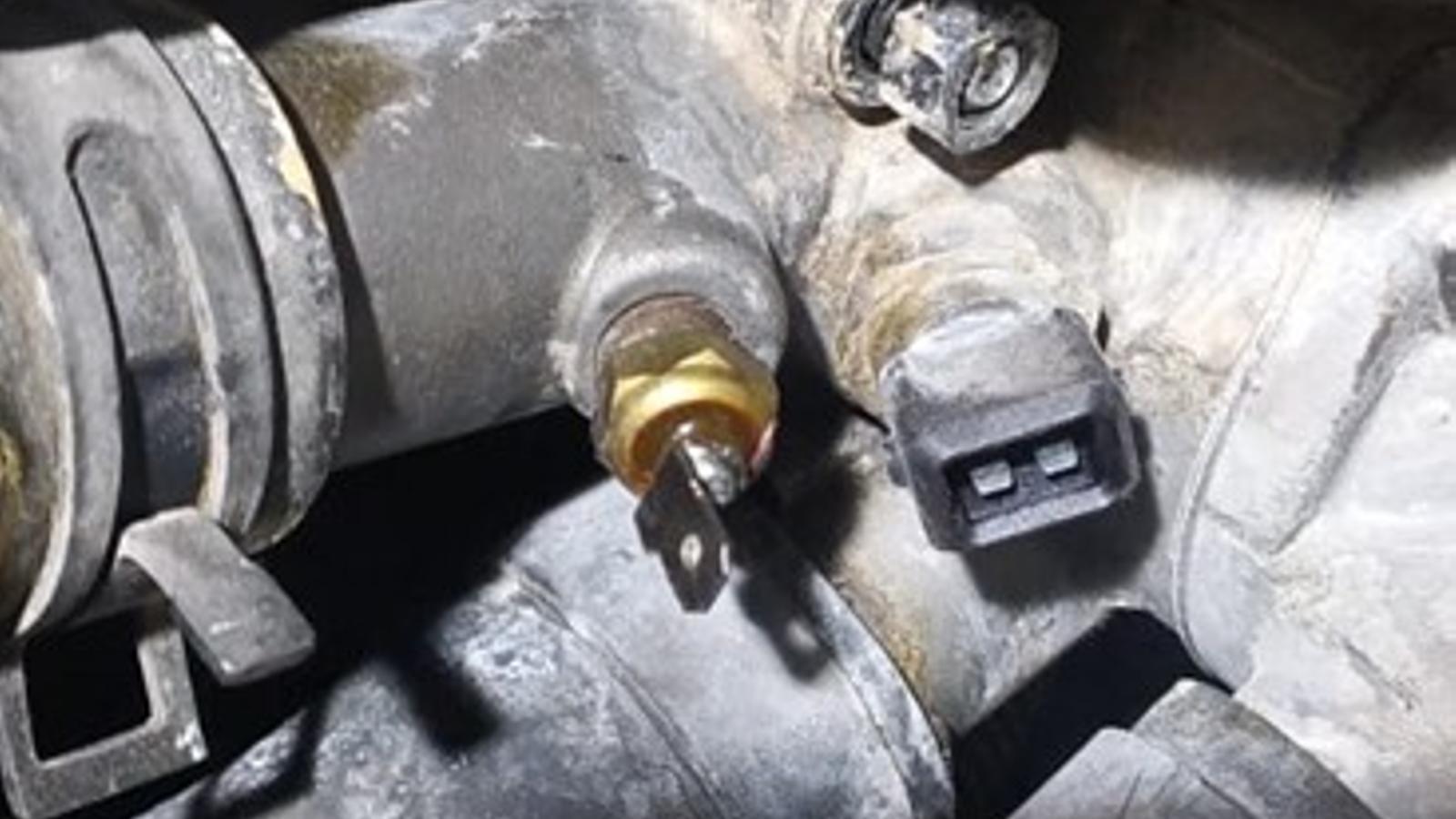
In addition to these problems while driving, a faulty engine temperature sensor can also complicate starting the vehicle, especially in cold climates, since the ECU cannot correctly calculate the fuel mixture needed for a cold start. And if the vehicle undergoes an emissions test, a sensor in poor condition can cause elevated levels of carbon monoxide and hydrocarbons in the exhaust, to the point that the car may fail to meet the required regulatory standards.
The ambient temperature sensor: a different component, different problems
The ambient temperature sensor — also known as the ambient temperature switch — is quite a different case. It is normally located at the lower front of the vehicle. Its function has nothing to do with the engine: it is responsible for reporting the actual outside temperature to the dashboard and sending that data to the air conditioning control module, so that the climate system can adjust its operation correctly.
When this sensor fails, the check engine light often comes on in the dashboard, and a scan commonly reveals trouble codes in the range from P0070 to P0074, although which codes apply depends on the vehicle model. These codes can appear because the sensor itself has deteriorated, a wire has broken, or the connector has a poor connection. That’s relatively common because this sensor is exposed at the lower front of the car.
The most noticeable symptom for the driver is usually an air conditioning system that stops cooling correctly or consistently: at times the system cools normally and at other times it simply does not, which almost always points to a faulty contact in the sensor or its wiring. In vehicles equipped with automatic climate control mode, another clear indicator of this same problem is that the system activates and deactivates on its own for no apparent reason. Finally, a symptom that anyone can easily verify is that the outside temperature displayed on the dashboard does not match the actual ambient temperature — something that can be confirmed simply by comparing that reading with a phone or any other reliable source.
Why it pays not to ignore these signs
Whether we are talking about the engine temperature sensor or the ambient temperature sensor, both share something in common: their failures rarely amount to just a minor inconvenience. In the case of the engine sensor, ignoring the symptoms can end in a far more costly repair if overheating reaches the point of damaging internal engine components. In the case of the ambient sensor, while the mechanical risk is lower, an air conditioning system that does not cool properly during a heat wave can quickly become a serious comfort issue.
That is why, in the presence of any of these symptoms:
-Engine that loses power
-Consumes more fuel,
-Air conditioning that cools intermittently
it is worth getting a diagnostic scan as soon as possible. Identifying in time which of the two sensors is failing, and whether the problem lies in the component itself or in its wiring and connection, is the difference between a simple, affordable repair and one that ends up becoming more complicated over time.
If you need to replace the sensor and can’t find one for your model, we’ll find it for you through Localizautor.