


How can you tell if the engine mount is damaged?
Engine mounts serve a simple but fundamental function: they are the connection point between the engine and the car's chassis. When they fail, you will not only notice annoying vibrations — you also risk damaging other parts of the vehicle. We explain how to identify the problem in time.
What are engine mounts and what are they for?
They are generally made from a combination of metal and rubber. The metal part provides structural support and strength, while the rubber component absorbs and reduces the vibrations generated by the engine when running.
An engine generates an enormous amount of power, and that translates into constant vibrations. Without mounts in good condition, those vibrations would pass directly to the bodywork and the cabin, and would also put excessive strain on other mechanical parts. Their main functions include:
- Stabilising and supporting the weight: they keep the engine fixed in the correct position.
- Dampening vibration: the rubber absorbs a large part of the movement generated by the engine.
- Absorbing impacts: they act as a cushion against potholes and road irregularities.
- Reducing noise: they block some of the noise and vibrations that reach the interior of the car.
- Maintaining alignment: they help keep the axle and transmission properly aligned.
- Preventing excessive friction: they stop the engine from rubbing directly against the chassis.
As with most car parts, the mounts — and especially the rubber seals — deteriorate with daily use. Mounts in good condition can reduce engine vibrations by up to 80%, which makes a noticeable difference to the driving experience.
Signs that the engine mount is damaged
If you notice any of these symptoms, the recommended course of action is to go for a mechanical inspection as soon as possible to confirm the diagnosis.
Strong vibrations
If you feel strong vibration in the seat, steering wheel or floor while driving, the engine mount is likely the culprit. In many cases, simply replacing the damaged rubber seal is enough. Bear in mind, however, that excessive vibrations can also be caused by a wheel alignment problem, a suspension issue, the exhaust system or the tyres, so it is advisable to have a specialist check it before replacing the wrong part.
Impact noises
It is one of the most characteristic signs: knocking, metallic noises or rattling coming from the engine compartment, especially when starting, changing gear or accelerating. They indicate that the engine is moving more than it should and is hitting other nearby parts.
Visible engine movement
If the engine clearly moves forwards, backwards or side to side within the compartment, it is a very obvious sign that one or more mounts have failed. This is usually noticeable when accelerating hard, taking a sharp corner or braking abruptly, and is frequently accompanied by the impact noises mentioned above.
Irregular handling
When the mounts fail to keep the engine stable, the car feels less solid, especially on poorly maintained roads, and can become harder to control normally.
Visible wear
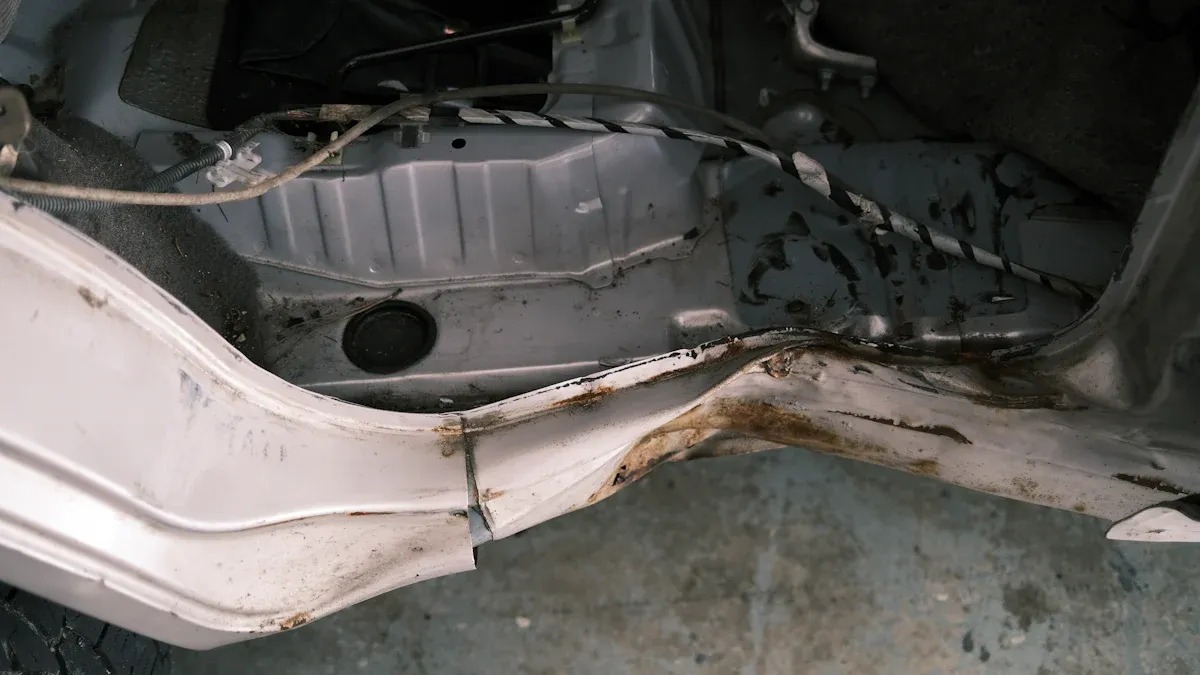
A visual inspection can also reveal the problem: cracks or tears in the rubber, corrosion on the metal parts, deformations or fluid leaks near the mounting point are clear signs that the mount needs attention.
Important: driving with a broken engine mount is unsafe. Excessive engine movement can damage hoses, cables, the transmission or even the brake lines, and can turn a minor repair into a far more costly one if ignored in time.
What happens if I don't replace the engine mount in time?
Ignoring a faulty mount rarely stays an isolated problem. Over time, excessive engine movement can cause:
- Increased wear and misalignment of the engine itself
- Damage to transmission components
- Deterioration of nearby hoses, belts and cables
- Worse performance and higher fuel consumption
- Real safety risk if the engine becomes detached from its position
For this reason, if any of the above symptoms appear, the most advisable course of action is to take the car in for inspection as soon as possible, rather than waiting for the problem to get worse.
Frequently asked questions
Can you drive with a faulty engine mount?
It is not advisable. Although the car may continue to function for a while, excessive engine movement can damage other parts and compromise safety, especially during hard braking or quick manoeuvres.
How often should engine mounts be inspected?
They do not have a fixed replacement interval like engine oil, but it is good practice to inspect them visually during oil changes or any general service, paying attention to cracks, leaks or misalignment.
How many engine mounts does a car have?
It depends on the model, but most vehicles have between two and four mounts distributed around the engine and, in some cases, also around the gearbox.
Can a broken engine mount damage other parts?
Yes. Excessive movement of the engine can affect hoses, cables, the transmission and even the brake lines, so it is best to have it repaired as soon as possible.