


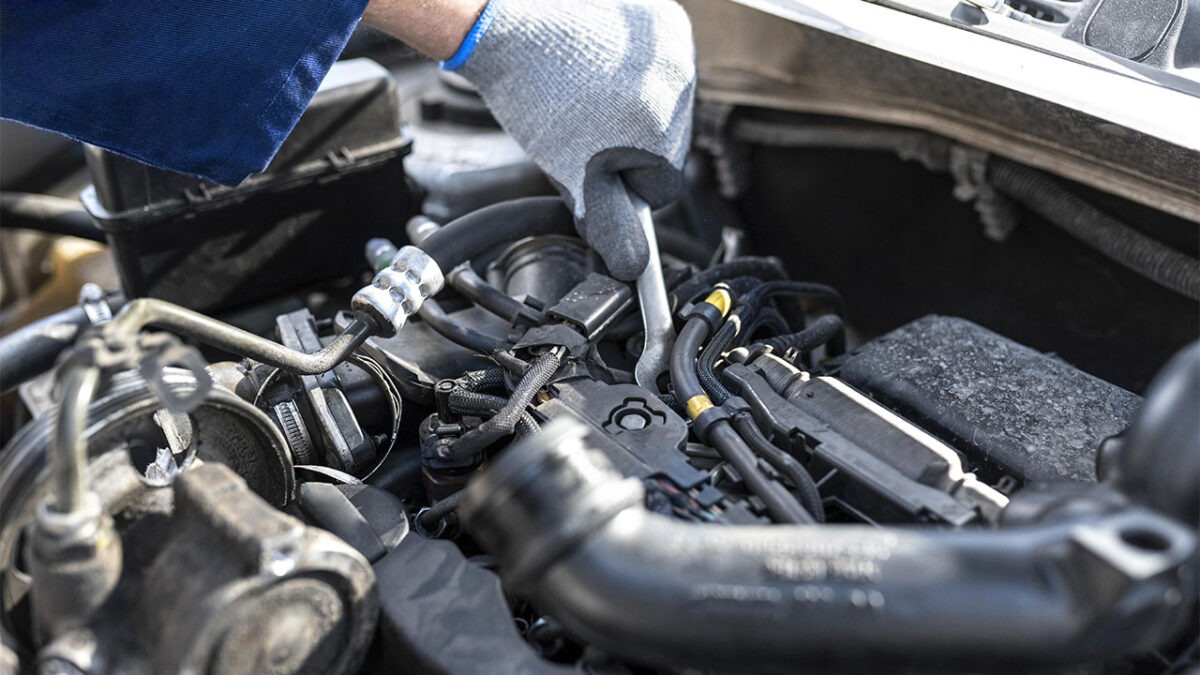
For the mechanic, distinguishing between a one-off overheating incident and serious damage caused by lack of coolant is key before quoting a repair. Below we review the signs that confirm the diagnosis — on the dashboard, on the engine exterior and in the fluids — and which parts should be checked and replaced in each case.
First signs: dashboard and engine exterior
- Temperature warning light or needle in the red zone. This is the first warning, but if the driver ignored it for several minutes, internal damage must be suspected.
- Steam or hot air coming from under the hood. Indicates that the remaining coolant has boiled; immediately check the level in the expansion tank (when cold).
- Sweet or burning smell. The sweet smell is coolant evaporating; the burning smell usually comes from hoses or gaskets dried out by heat.
- White smoke from the exhaust. Classic symptom of coolant entering the combustion chamber — direct suspicion of a blown head gasket.
- Total loss of power or engine stall. The engine management system itself may cut the engine to prevent further damage ("limp home" mode or complete shutdown).
Confirming the diagnosis: under-hood inspection
1. Locate the leak before refilling
Let the engine cool down completely. With the system cold, check the hoses, radiator, water pump and expansion tank. A pink, blue, yellow or fluorescent green stain on the ground confirms a coolant leak; do not confuse it with condensation water from the air conditioning, which is clear and does not indicate a fault.
2. Check the oil on the dipstick
If the oil looks milky or like "coffee with milk", coolant has mixed with the lubricant — an almost unmistakable sign of a damaged head gasket or, in serious cases, a crack in the block or the cylinder head itself. At this point it is no longer a minor repair: you need to consider replacing the cylinder head and gaskets, and in many cases also the complete engine if there is damage to the liners or connecting rods.
3. Listen to the engine while running (with caution)
Dry knocking sounds like "tick-tick" or metallic clicking point to excessive expansion of pistons, connecting rods or bearings due to prolonged overheating. If they appear together with loss of compression, the engine is probably not repairable with a simple gasket replacement and a complete engine swap must be considered.
Parts to check and replace
Once the source of the fault has been identified, these are the parts most frequently replaced in a coolant loss failure. All available verified in the Recoautos catalog:
- Water pump — if it has lost its seal or the impeller is damaged from running dry.
? View water pumps at Recoautos - Radiator cap / expansion tank cap — a faulty pressure valve is a common cause of progressive coolant loss.
? View radiator caps at Recoautos - Electric cooling fan — if it does not start at the correct temperature, the engine overheats even when the coolant circuit is in good condition.
? View electric cooling fans at Recoautos - Thermostat — a thermostat stuck in the closed position prevents coolant from circulating to the radiator and causes sudden overheating.
? Find thermostats at Recoautos - Cylinder head and complete engine — when the oil appears contaminated or compression loss is confirmed, the repair involves the cylinder head, gaskets or, in the most serious cases, a verified complete engine.
? View second-hand engines and cylinder heads at Recoautos
Quick diagnosis summary for the workshop
| Observed symptom | Possible cause | Severity |
|---|---|---|
| Needle in the red, no other signs | Low coolant level, minor external leak | Low — check and top up |
| Steam under the hood + sweet smell | Active leak, coolant boiling | Medium — locate leak (hose, radiator, pump) |
| Constant white smoke from the exhaust | Blown head gasket | High — requires cylinder head removal |
| Milky oil on the dipstick | Coolant-oil mix, damaged cylinder head or block | High — consider complete engine replacement |
| Metallic noises + loss of power | Internal damage from expansion (pistons, connecting rods, bearings) | Very high — engine not repairable, replacement recommended |
For any questions about part compatibility with the exact model and engine variant of the vehicle, at Recoautos we verify each component before sale and confirm the OEM reference, which reduces the margin of error in diagnosis and installation.