


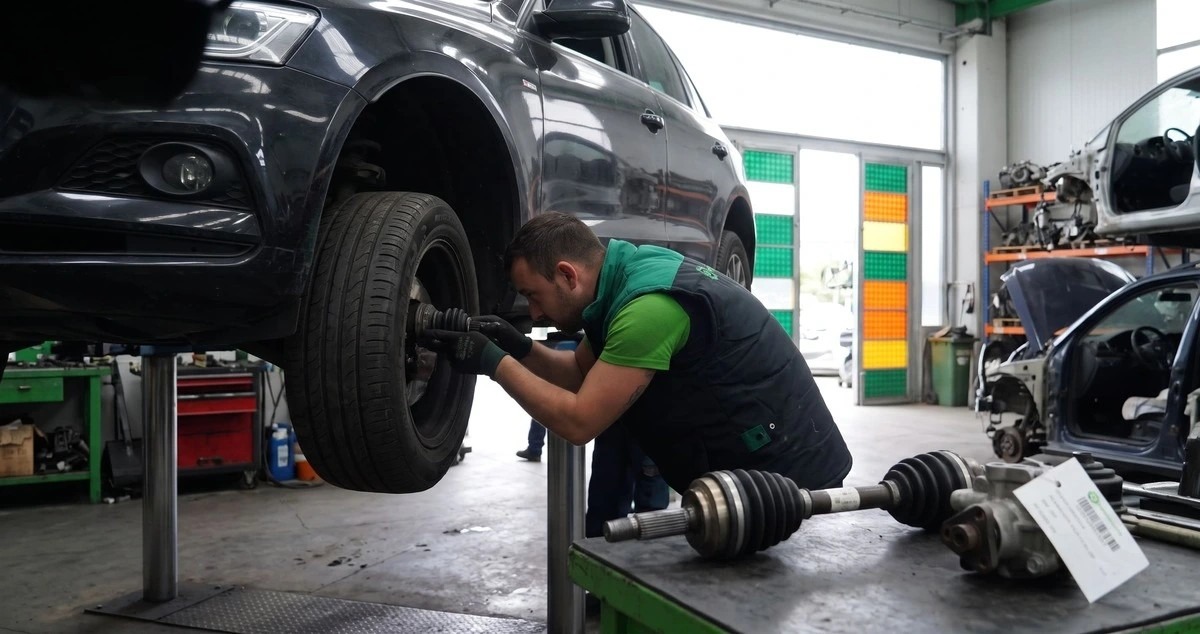
Noise when turning the steering wheel usually comes from a steering, suspension or transmission part. Each one sounds different: a squeal, a click or a knock tells you where to start looking. If the noise is new, the safest thing is to stop driving until a garage finds the cause.
At Recoautos, a scrapyard in Hontoria (Segovia) with original used parts, we explain which part is behind each noise, how to check it at home and what to do if it needs replacing.
Noise when turning the steering wheel: what you hear and which part is usually responsible
Each noise points to a different part, and when it occurs is the most useful clue. This table summarises the most common cases:
| Noise | When it occurs | Part usually responsible |
|---|---|---|
| Squeal | When turning the steering wheel | Low power steering fluid (hydraulic power steering) or a loose belt |
| Repeated sharp clicking | When turning with the steering wheel fully turned, louder when accelerating | CV joint |
| Metallic knock | When turning, and sometimes when going over bumps | Track rod end or suspension arm |
| Soft creaking | When turning over uneven surfaces | Strut top mount |
Squealing when turning the steering wheel: power steering pump and fluid
A squeal when turning may come from the hydraulic power steering system when the fluid is low. This fluid lubricates and pressurises the power steering pump, the part that helps you turn the steering wheel with little effort. If the fluid runs out, the pump can seize, and the repair is considerably more expensive than topping up the reservoir. Many modern cars have electric power steering and do not have this reservoir, so in these cars the squeal is not caused by low fluid.
A worn or loose belt can also squeal when turning, because in hydraulic power steering systems it drives the pump. If your car has a power steering fluid reservoir, check the level when the engine is cold: if it drops frequently, there may be a leak that should be traced. If it does not have one, it is best to have a garage check the cause of the squeal.
If what you notice is not a noise but a steering wheel that is hard to turn, we explain this in stiff steering when turning.
Clicks and knocks when turning the steering wheel: CV joints and track rod ends
A repeated sharp click with the steering wheel fully turned usually comes from the CV joint, the part that transmits the engine's rotation to the wheel as it turns. It is louder when accelerating through a corner. The sound changes depending on the load and manoeuvre, so the direction of the turn alone is not enough to tell which joint is damaged: it is best to have a garage check it.
The most common cause is a torn boot, the rubber cover that protects the joint: grease escapes and dirt gets in. If the joint seizes or breaks, the car can suddenly lose traction, so you should not put off having it checked.
A metallic knock when turning points to excessive play. It is usually a track rod end, the part that connects the steering to the wheel and allows it to turn, or a worn suspension arm. You may also notice the knock when going over bumps.
DOES YOUR CAR MAKE A NOISE WHEN YOU TURN THE STEERING WHEEL?
At Recoautos, we have original used parts for various makes and models.
Already know which part you need? Send us your registration number and we’ll help you find it.
How to check the cause of the noise and when to go to a garage
First, note when it occurs. If the noise happens with the car stationary and the steering wheel turned, it usually points to the steering system: the fluid (in hydraulic power steering systems), the pump or the strut mounts. If it only happens while driving and gets louder when accelerating through a corner, it is usually the transmission.
Next, with the wheels straight and the car stationary, check the level in the power steering reservoir, if your car has one, and look for grease splattered inside the front wheels, a sign of a torn boot.
If the noise is new, stop driving until a garage finds the cause, and leave the fitting of steering and transmission parts to them as well.
Once you know which part needs replacing, it is useful to have its OEM reference: the code the manufacturer assigns to the original part, which helps identify whether it fits your car. With that, or with your registration number, we can check whether we have it in stock. If we don't, we search a supplier network using Localizautor, at no charge for the search, and deliver it to your door when we find it.
Frequently asked questions
What information should I send to order a steering or transmission part?
Your car's registration number is enough, along with the part reference if you have it. A photo of the old part or the area where the noise occurs also helps us identify it. If you message us on WhatsApp, we can send you photos of the part.
Is a knock when turning the steering wheel all the way to the stop a fault?
A knock when the steering wheel reaches full lock does not always indicate a fault, but if it is loud, new or repeated, it should be checked at a garage. It may be caused by the steering rack's own stop, the part that converts the steering wheel's rotation into wheel movement, or by play in a steering component. Avoid forcing the steering wheel against the stop.
Can tyres or steering wheel cables make a noise when turning?
Yes. Worn tyres or incorrect wheel alignment can make a noise when turning even when no part is damaged. The steering wheel cables, including those for the airbag and angle sensor, can also rub, and sometimes the airbag warning light comes on.
Need a used steering or transmission part?
Noise when turning the steering wheel can be resolved by identifying the part in time, and the type of sound and when it occurs are the best clues. At Recoautos, we can help you find the part:
- Original used steering and transmission parts: scrapyard power steering pumps, track rod ends or CV joints, with a 7-year warranty.
- Search across a supplier network using Localizautor if the part is out of stock, with no charge for the search and home delivery when we find it.
Send us your registration number and the part reference or a photo via request a part, message us via contact or call 921 42 43 53.