


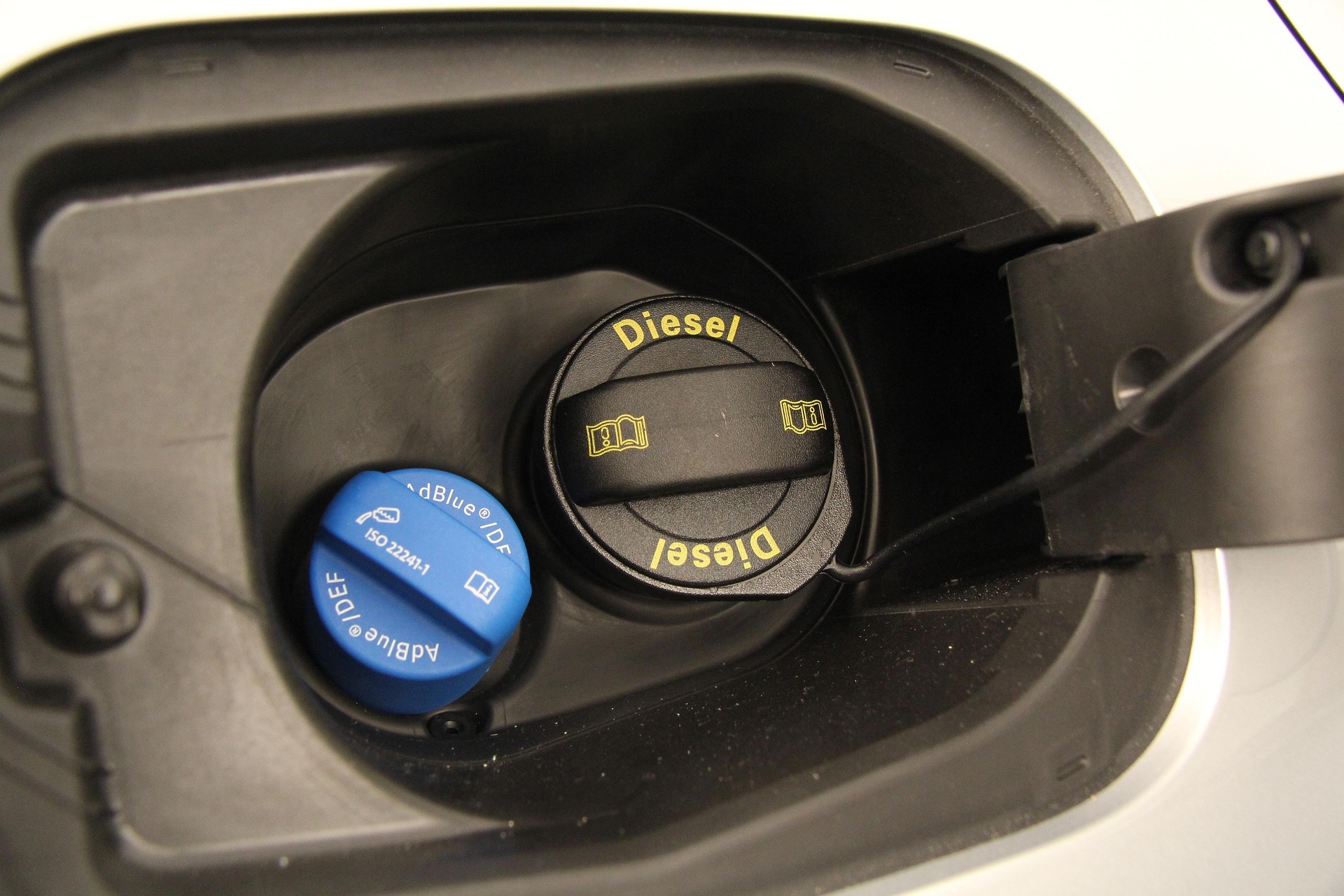
Has your dashboard displayed an “AdBlue fault” or “Emissions control system fault” message, or a warning that the car will not start after a certain number of kilometers?
It doesn’t always mean the AdBlue has run out. The warning could be caused by a faulty NOx sensor, a clogged AdBlue injector, a failed pump, fluid crystallization, or a problem with the SCR system.
In this guide, we cover the most common AdBlue system faults, how to recognize their symptoms, and which components to check before replacing parts.
What is AdBlue, and what does it do?
AdBlue is a solution used primarily in diesel vehicles equipped with an SCR (Selective Catalytic Reduction) system.
AdBlue is not mixed with diesel fuel. The vehicle has a separate tank, and the system injects AdBlue into the exhaust gases to help reduce nitrogen oxide (NOx) emissions.
Several components are involved:
AdBlue tank.
AdBlue pump or module.
AdBlue injector.
NOx sensors.
Level and temperature sensors.
Lines and heaters.
SCR catalytic converter.
Electronic control unit.
That’s why, when an AdBlue fault appears, refilling the tank does not always solve the problem.
The 7 most common AdBlue system faults
1. AdBlue crystallization
This is one of the problems most worth checking.
When the water in the solution evaporates, white deposits of crystallized urea can form. This residue can build up around the injector, connections, or lines.
Common symptoms
Emissions control system fault warning.
White residue around the system.
Dosing problems.
Irregular AdBlue consumption.
Check engine light.
Recurring faults after refilling the tank.
If crystallization is present, its source should be identified before replacing components unnecessarily.
2. Faulty NOx sensor
NOx sensors monitor the amount of nitrogen oxides in the exhaust gases and are essential for the ECU to manage the SCR system correctly.
When one fails, it may send incorrect information to the ECU.
How can you tell if the NOx sensor is faulty?
Some symptoms include:
Check engine light.
Emissions control system fault message.
AdBlue warning even though there is fluid in the tank.
Increased AdBlue consumption.
Loss of power in some vehicles.
Countdown until the engine can no longer be restarted.
Before replacing the SCR catalytic converter, check the NOx sensors and carry out a proper diagnosis.
3. Faulty AdBlue pump
The AdBlue pump generates the pressure needed to send the fluid to the injector.
If the pump stops working properly, the system may detect insufficient pressure and log a fault.
Symptoms of a faulty AdBlue pump
The AdBlue level is correct, but the warning keeps appearing.
SCR system fault.
Insufficient pressure.
Check engine light.
Distance countdown.
The vehicle may eventually prevent the engine from starting.
In some cars, the pump is part of a module integrated into the AdBlue tank, so it’s important to check the exact part number before buying a replacement.
4. Clogged AdBlue injector
The injector sprays a controlled amount of AdBlue into the exhaust.
Residue buildup or crystallization can clog it and cause incorrect dosing.
What symptoms does it cause?
You may see:
Emissions control system fault.
Crystallization around the injector.
AdBlue consumption is too high or too low.
SCR efficiency errors.
Check engine light.
Depending on the component’s condition, you’ll need to determine whether it can be cleaned or must be replaced.
5. AdBlue tank or module failure
In some vehicles, the tank assembly contains several components:
Pump.
Level sensor.
Temperature sensor.
Heater.
Electronic control system.
As a result, a seemingly simple fault may trigger an error associated with the entire tank assembly.
Before buying an entire AdBlue tank, it’s essential to have the problem diagnosed and check the part number.
6. AdBlue heater failure
AdBlue can freeze at approximately -11 °C.
Vehicles designed to use AdBlue have heating systems that allow normal operation to resume when temperatures are very low.
If the heater or one of its components fails, dosing or system operation errors may appear.
7. Deteriorated SCR catalytic converter
The SCR catalytic converter is one of the most important and potentially most expensive components in the system.
But an SCR efficiency error does not automatically mean the catalytic converter is faulty.
Before replacing it, you should check components such as:
NOx sensors.
Injector.
System pressure.
AdBlue quality.
Exhaust temperatures.
DPF/FAP.
EGR.
Wiring and connections.
A proper diagnosis can prevent you from replacing an expensive part when the problem lies in another component.
Why does an “AdBlue fault” appear when the tank is full?
This is one of the most common questions.
If you’ve refilled the tank but the AdBlue warning remains on, the problem may not be related to the amount of fluid.
Possible causes include:
Faulty level sensor.
Faulty NOx sensor.
Insufficient pump pressure.
Clogged injector.
Crystallized AdBlue.
Electrical problem.
Tank module failure.
Error stored in the ECU.
That’s why adding more AdBlue when there’s already enough in the tank usually won’t fix an electrical or mechanical fault.
What does “Starting impossible in X km” mean?
Some vehicles display messages such as:
“Starting impossible in 1,100 km”
or
“Starting impossible in X km”.
This warning is especially important.
The system has detected a problem related to emissions or SCR operation and has started a countdown.
If you ignore the warning, depending on the vehicle and the fault detected, you may reach a point where you cannot restart the engine after turning it off until the problem is fixed.
That’s why it’s best to have the problem diagnosed as soon as possible.
AdBlue-related trouble codes
A diagnostic scanner can help identify the source of the problem.
Some OBD codes related to the SCR system that may appear include:
| Code | Possible connection |
|---|---|
| P20E8 | Reductant pressure too low |
| P20EE | SCR system efficiency below threshold |
| P204F | Reductant system performance problem |
| P207F | Problem related to reductant quality or performance |
| P2200 / P2201 | Possible NOx sensor problem |
| P229E / P229F | Possible NOx sensor problem |
A trouble code is a starting point for diagnosis, but it should not be used on its own to decide which part to replace.
Can you drive with an AdBlue system fault?
It depends on the fault and the vehicle.
In some cases, the car may appear to drive normally for a while. In others, it may enter limp mode, limit performance, or start a countdown until the engine can no longer be restarted.
If an AdBlue or emissions control system warning appears, it’s best to have the problem diagnosed before it leaves the vehicle unable to move.
AdBlue, DPF, and EGR: are they connected?
Yes, although they are different systems.
In a modern diesel vehicle, several components work together to control emissions:
EGR → DPF/FAP → SCR/AdBlue system → NOx sensors
A problem with another component can affect the conditions under which the emissions control system operates.
For example, a clogged DPF, faulty temperature sensors, or certain EGR faults can affect how the system works as a whole.
That’s why it’s important to avoid diagnosing the problem by “replacing parts until something works.”
How much does it cost to repair an AdBlue system fault?
The cost can vary greatly depending on the vehicle and which part has failed.
Replacing a sensor does not cost the same as replacing an entire tank or an SCR catalytic converter.
Before agreeing to an expensive repair, it’s worth finding out:
The stored trouble code.
Which component has been checked.
The part’s OEM number.
Whether a compatible used OEM part is available.
Especially for components that are expensive to buy new, checking the used parts market can help significantly reduce repair costs.
Can a used AdBlue system part be installed?
It depends on the component, its condition, and its compatibility with the vehicle.
Used OEM parts may be available for certain tanks, modules, pumps, sensors, or emissions control system components.
But there’s one crucial point:
Always check the part number.
Two seemingly identical vehicles may have different components depending on:
Year.
Engine type.
Version.
Emissions standard.
Component manufacturer.
OEM part number.
At Recoautos, you can search for used OEM parts for your vehicle and check availability before paying for a new part.
How to prevent AdBlue system faults
A few good practices can help reduce problems:
Use AdBlue that meets the applicable specifications.
Keep dirt out of the tank.
Do not mix AdBlue with diesel fuel, water, or other products.
Do not ignore dashboard warnings.
Check promptly for any leaks or crystallization.
Do not replace components without diagnosing the problem first.
Always check the part number before buying a part.
Frequently asked questions about AdBlue system faults
Why does my car show an AdBlue fault after I refill the tank?
There may be a problem with the level sensor, NOx sensor, pump, injector, tank module, or SCR system. Refilling the tank will not fix a fault in these components.
What happens if I ignore the AdBlue warning?
Depending on the vehicle, its operation may be restricted, and a countdown may begin before the engine can no longer be restarted.
Why does AdBlue crystallize?
When some of the water in the solution evaporates, solid urea deposits can remain, especially around the injector and wherever there are small leaks.
Can a failed NOx sensor look like an AdBlue system fault?
Yes. NOx sensors help control the SCR system, and an incorrect reading can trigger emissions control system warnings.
Does a P20EE error mean I need to replace the catalytic converter?
Not necessarily. The code indicates an SCR system efficiency problem, but other components and operating conditions should be checked before replacing the catalytic converter.
Can I buy a used AdBlue pump or tank?
A compatible used OEM part may be available. The most important thing is to check the OEM part number and confirm an exact fit for the vehicle.
Can I remove or disable the AdBlue system?
The system is part of the vehicle’s emissions control equipment. If it develops a fault, the right solution is to diagnose and repair it, not remove it.
Need a part to repair your AdBlue system?
If diagnosis shows that you need to replace a component, check whether a compatible used OEM part is available for your car before buying a new one.
At Recoautos, we stock thousands of parts from dismantled vehicles, and you can search for a part by vehicle or part number.
Search for your part at Recoautos.com and check availability.
Can’t find the part you need? Request it, and we’ll help you locate it.