


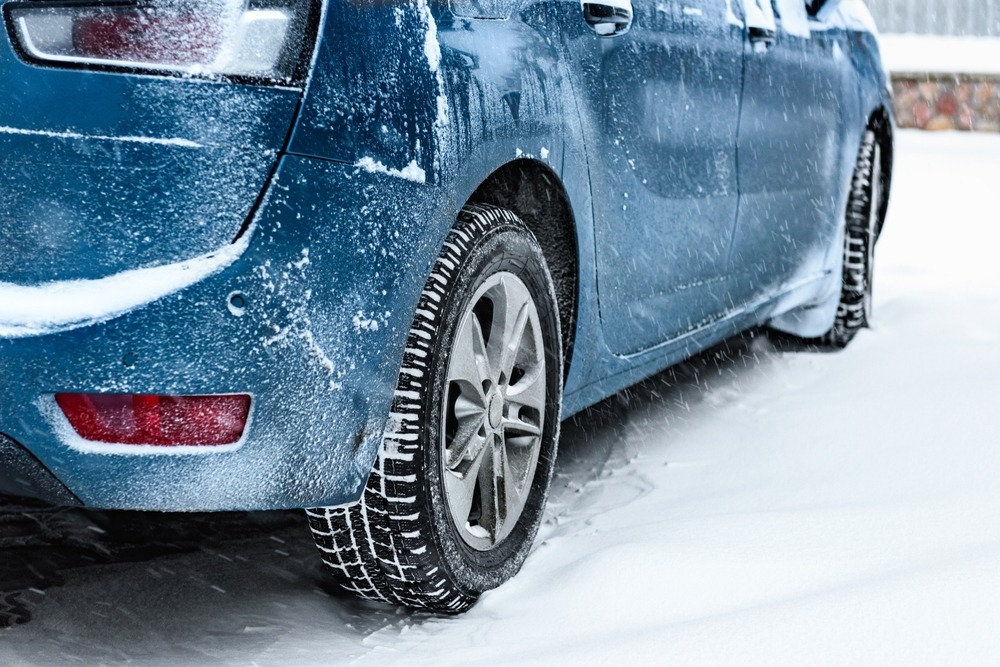
With the arrival of cold weather, we need to adjust our driving style slightly, especially in those winter regions where there is a significant drop in temperatures, because that means ice on the road, wetter ground, or areas covered in snow.
Given this, you can no longer use the same tyres you have been using throughout the year, and it is time to switch to winter tyres, which are designed with a special compound and deep tread patterns to provide optimal grip, even on icy surfaces or wet asphalt.
However, equipping a vehicle with a full set of seasonal tyres can represent a significant outlay. Fortunately, there is a smart alternative for those seeking maximum safety without compromising their budget: buying second-hand tyres. In this article, we will explain in detail what makes winter tyres so special and how you can save significantly by purchasing nearly-new tyres with a full guarantee, allowing you to face the cold season with the peace of mind of precise and economical driving.
What are winter tyres?
Although they are usually associated with tyres that need to be fitted when driving in snowy areas, the truth is they are useful for much more.
To begin with, they are designed with a special chemical composition. While a tyre becomes harder and more slippery in cold weather, winter tyres are manufactured with a rubber compound that is softer and more flexible, with a high silica content.
Thanks to this, the tyre does not freeze in low temperatures, maintaining its elasticity. In addition, more grooves are incorporated, known as sipes, which act like claws that bite into ice and snow, improving the traction that a summer tyre cannot offer.

How can I tell if my tyres are winter tyres?
In reality it is quite simple, you just need to look at the sidewall of the tyre, that is, the side, where you will find two markings:
- The first is the M+S marking, which stands for Mud and Snow. This is the basic marking, indicating that it has a tread pattern for driving on soft surfaces but does not by itself guarantee optimal performance in extreme cold conditions.
- The second marking you may find is 3PMSF, which is the seal of genuine certification, and is recognised because it is represented by a three-peaked mountain with a snowflake inside. This means they are ideal for winter and can be used without chains.
What advantages do winter tyres have over chains?
Of course, it is not necessary to change all the tyres on your car just because winter is coming and you can resort to chains, but perhaps you should think about the advantages they offer, especially if you live in an area where winter is very harsh:
Comfort
You will forget about having to get out of the car to put on and take off chains. Simply drive with peace of mind without worrying about anything.
Safety
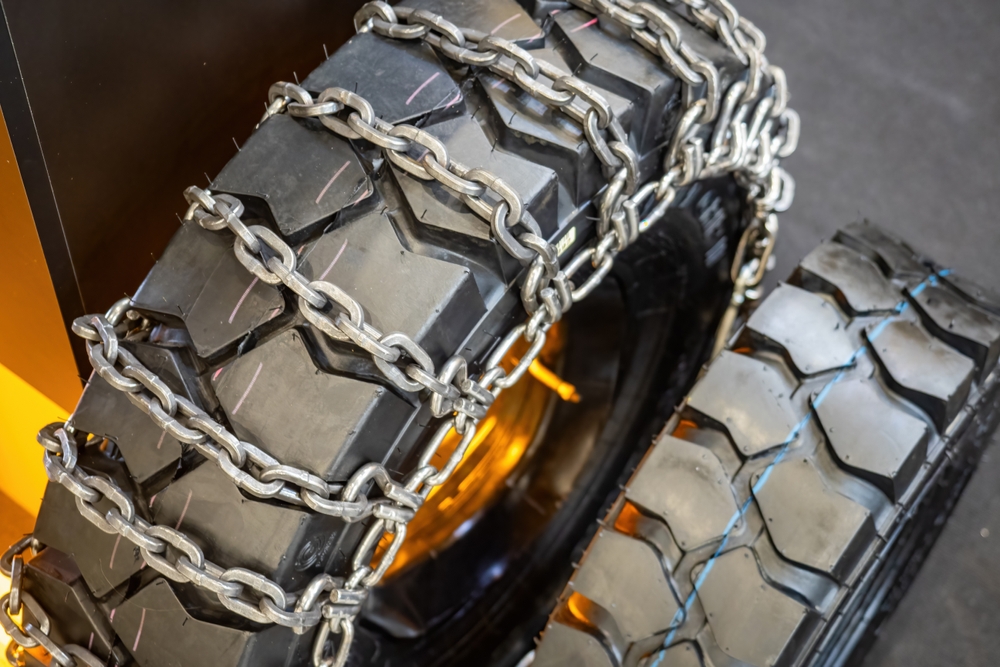
Contrary to what many believe, chains are only useful in deep snow, whereas winter tyres work in snow, rain, and ice patches when the asphalt is very cold.
Better braking
Tests carried out have shown that if you are travelling at a speed of 50 km/h on snow, a car fitted with winter tyres brakes within 32 metres, while summer tyres with chains on the wheels travel a greater distance.
Full traction
Chains only provide grip to the wheels while the car is moving, whereas winter tyres, when the vehicle is stationary or taking a corner, ensure it does not "fishtail".
Go for All Season tyres and forget about everything
You will surely not want to bear the large expense of changing all the tyres on your car, especially because it has to be done twice a year and is a waste of time and money.
So we have the perfect solution for you: fitting your car with what are known as all season tyres, that is, tyres that can be used in both summer and winter, regardless of the scorching heat of August or the snowfall of January.
Why choose them?
- They are certified for use in snow, carrying the 3PMSF marking, which means that, legally, you can drive in snowy areas without using chains.
- You will forget about workshop visits with each change of season, along with the savings that entails.
- Their design is specially conceived to evacuate water, reducing the risk of aquaplaning during the autumn and spring months.
But, and the big question, are they better than winter tyres? Well, no, they would not be very useful in areas of extreme snow or where there is constant polar cold. In this case, you should indeed opt for a winter tyre.
Now, to save money, there is no need to buy them new when you can buy them second-hand from a salvage yard and use what you save to pay a mechanic to do the changeover (if you do not know how to do it yourself).