



Summer will be here before we know it, and as a driver, you already know it is one of the most critical times for you, both when commuting to work and when you decide to pack the boot and head off on a week's holiday.
Before the sweltering heat of July and August arrives, you should start taking steps to travel safely in summer. The asphalt in Spain can reach temperatures above 60°C, becoming an abrasive surface that puts every component of our vehicle to the test.
One of the elements that suffers most under these conditions is the tyres; heat increases the internal pressure and accelerates rubber wear. If when checking your car you notice that the tread is close to the legal limit or that the sidewalls show cracks, don't take the risk. An excellent option to maintain safety without blowing the holiday budget is buying second-hand tyres of high quality.
Many of these tyres come from fleets that are renewed by time and not by use, offering an optimal tread depth and a reliable structure for a fraction of the cost of new ones. With the asphalt boiling, having good grip is the difference between a smooth journey and an unnecessary scare.
Why is it important to take extra precautions in summer?
Driving in summer is not simply "driving in the sun". It means facing a series of physical and biological variables that alter our reaction capacity. Fatigue sets in much earlier, visibility can be affected by glare, and the car's mechanics work at the limit of their thermal capabilities.
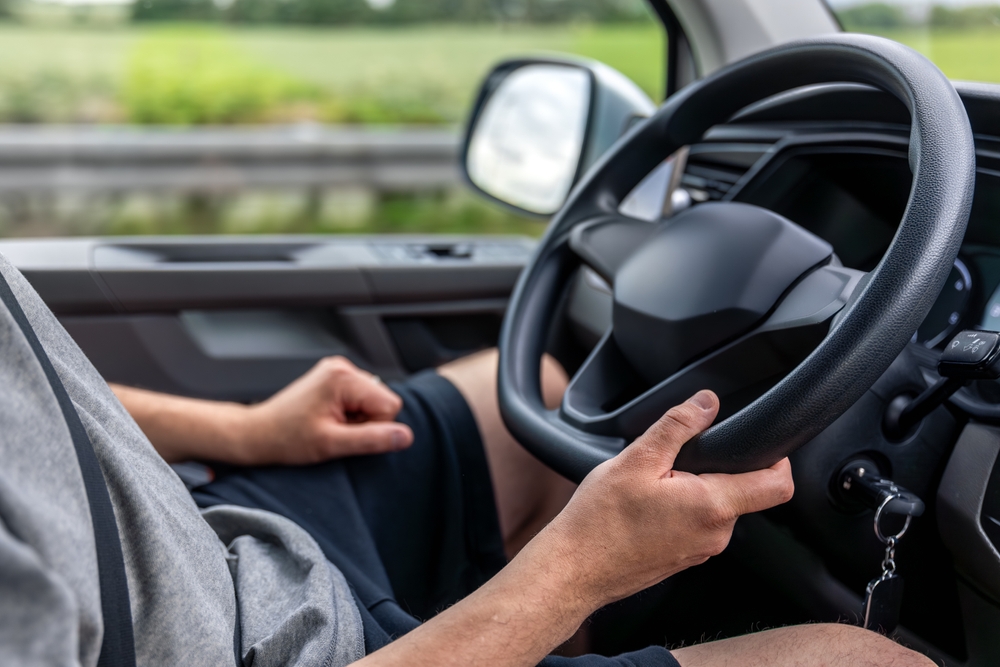
Why does the car overheat in summer?
The heating of a vehicle in summer is due to a thermal accumulation phenomenon. A car is, basically, a metal box with large glass surfaces. This generates a massive greenhouse effect: solar radiation enters through the windows, heats up the interior materials (plastics, leather, textiles) and that heat becomes trapped.
On a mechanical level, the engine generates its own thermal energy through combustion. In winter, the outside air helps to cool the system efficiently. In summer, however, the air entering through the radiator is already at 35°C or 40°C, so the cooling system has to work twice as hard to keep the engine at its optimal 90°C.
If the coolant is degraded or the radiator is dirty, the car cannot dissipate the heat and we will suffer overheating that can melt the head gasket in a matter of minutes.
Why do car windows fog up in summer?
We tend to associate fogged-up windows with the cold of winter, but in summer it happens frequently due to the difference in temperature and humidity.
When we turn the air conditioning up very high and direct the vents straight at the windscreen, the glass cools down drastically. If it is very hot and humid outside, the water vapour in the outside air condenses when it touches the cold glass, creating that mist on the outside.
When this happens, how can you demist the windows of your car in summer?
- Direct the vents towards your body or feet, never directly at the windscreen.
- If the mist is on the outside, a quick wipe with a little windscreen washer fluid will remove it instantly.
- It is very important that when you activate the air conditioning you don't overdo it, as a temperature of 22°C is enough to feel comfortable in the cabin.
Travelling safely by car in summer — what measures should you take?
Having the car in good shape to be able to drive on the road is important, but 80% of road safety depends on the human factor.
Before the summer season arrives and temperatures rise and, above all, before making a long journey, it is very important to plan the entire route taking into account three factors:
- The temperature
- The road conditions
- Your physical and mental state
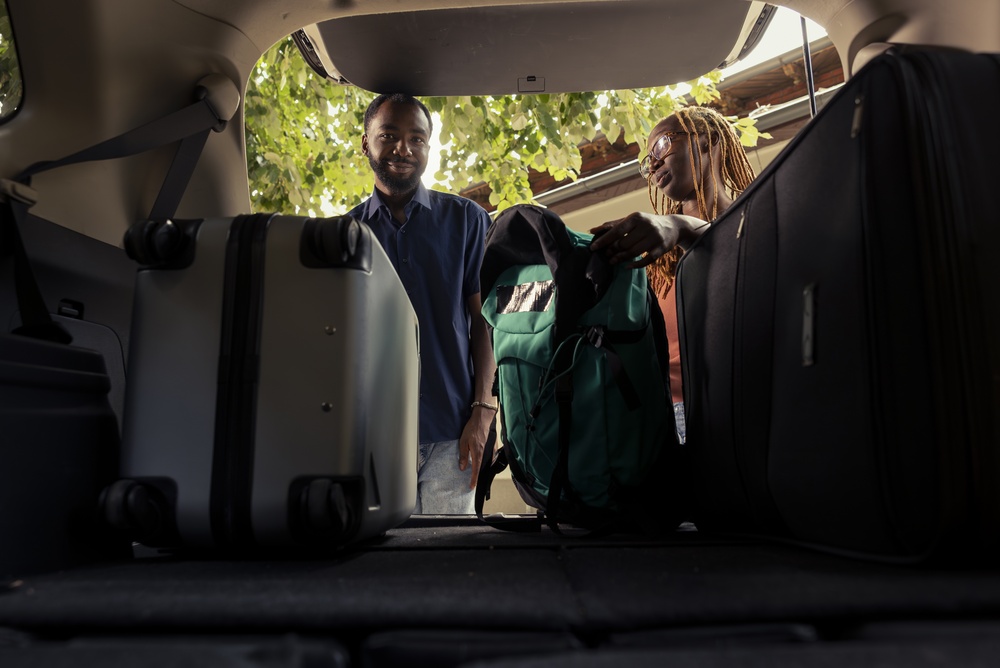
Avoid driving during the hottest hours of the day
The worst hours to drive in summer are between 12:00 and 17:00, and are considered red zones, as radiation is at its peak and the effort of the air conditioning drains power from the engine and attention from the driver.
Furthermore, if you drive at an interior temperature of 35°C, it will be equivalent to driving with a blood alcohol level of 0.5 grams per litre; your reactions will be slower and your ability to process signals will decrease.
If the journey is very long, it is best to set off in the afternoon or very early in the morning if you want to avoid traffic jams. Of course, you won't always be able to avoid driving at these hours, for which you should follow the tips we will give you below.
Respect the recommended rest periods
The best advice we can give you when driving in summer: respect, without question, the recommended rest periods while driving.
Bear in mind that the heat gradually wears down your nervous system, and even if you feel fine, your brain has to make an extra effort to keep you alert while driving. So, if you are going on a long journey, stop every 2 hours or 200 kilometres, get out of the car, walk a little in the shade and stretch your legs.
Just by doing this for a few minutes, you will reactivate your blood circulation and clear your mind.
Drink water or juices frequently
Dehydration causes dizziness, headaches and fatigue. Always keep a bottle of fresh water (but not ice-cold, to avoid digestive issues) in the cabin. Drink small sips constantly. Avoid drinks with lots of sugar or excessive caffeine, as although they give an initial boost, they can cause a rebound effect of tiredness shortly after.
Don't stuff yourself before getting in the car
A heavy meal diverts a large part of the blood flow to the stomach, taking it away from the brain. This causes an irresistible drowsiness. Opt for salads, fruit or light sandwiches. It is better to eat a little several times than a lot all at once.
Wear light clothing and sunglasses
Wear cotton clothing or breathable technical fabrics. And please, never drive in flip-flops.
On the other hand… Avoid at all costs driving in flip-flops or sandals! Yes, they are the most comfortable footwear for getting around in summer, as they keep your feet cool and don't cause as much sweating, but they can get caught on the pedals or slip during an emergency braking, preventing you from applying the necessary force.
Sunglasses are an indispensable item, and our advice is that they should be polarised, as they reduce glare from the asphalt and prevent eye fatigue caused by excessive brightness.
Park the car in the shade
Whenever possible, seek shelter from the sun. If there is no shade available, use sun visors on the windscreen and, if possible, on the rear windows. A vital tip: be careful with the catalytic converter. The exhaust pipe reaches very high temperatures. If you park over dry shrubs, the heat from the exhaust can start a forest fire in seconds. Always park in clear areas.
Wash the car frequently
Washing the car more frequently in summer is not for aesthetic reasons, but because a thick layer of dust, dead insects and dirt on the bodywork absorbs more heat and makes it harder to cool the bodywork.
Furthermore, clean windows reduce glare and improve visibility, something crucial when the sun is low and shining directly at us.
Plan your route in advance
In summer there are many roadworks taking advantage of the good weather. Check traffic apps before you leave. Knowing where there is a petrol station with shade or a rest area with trees can save you from a stressful moment if the heat gets too intense.
Drive rested
Don't set off on a journey right after work if you're going to drive 500 kilometres. The accumulated tiredness from the week, combined with the heat of the journey, is a lethal combination. Sleep at least 7 or 8 hours the night before.
How to prepare your car for summer
Your vehicle needs a "medical check-up" before facing the holiday marathon. Here I detail the points you cannot overlook:

Check the air conditioning
If you notice that the air does not come out cold immediately or that it smells of damp, you probably need a gas recharge or to change the pollen filter. A blocked filter makes the system work under strain, consume more fuel and fail to cool the cabin properly.
Check the cooling systems
It is the most critical point. Check the coolant level (always with the engine cold — never open the cap when hot!). If the level drops frequently, you may have a leak in a hose. Also check that the electric cooling fan kicks in when the car reaches operating temperature; if it doesn't work, the engine will overheat at the first traffic jam you encounter.
Check tyre pressure and condition
As mentioned at the beginning, tyres are the ones that take the direct punishment from the asphalt.
Pressure
Adjust it to what the manufacturer recommends for a "loaded" car (we tend to travel with more luggage in summer). Low pressure increases friction and can cause a blowout due to heat.
Tread
The legal minimum is 1.6 mm, but in summer, with sudden storms or very hot asphalt, it is recommended not to go below 3 mm.
If your budget is tight, remember that reviewed second-hand tyres are a smart option for keeping your tyres in good condition without breaking the bank.
Check the condition of the brakes
Excessive heat causes the phenomenon known as fading: the brake fluid heats up so much that bubbles can appear, and when you press the pedal, it feels "spongy" and the car does not brake.
Check the thickness of the brake pads; if they are very worn, they will transfer more heat to the brake fluid.
General battery and lights check
Batteries suffer more in extreme heat than in the cold. Heat accelerates the internal chemical reaction and can leave you stranded without warning. Also check that all the bulbs are working; in summer we tend to travel at night and a blown light is a high safety risk.
How to cool down your car in summer
Arriving at a car that has been in the sun for 4 hours is like stepping into an oven. Here is the most effective method for cooling it down quickly without damaging the air conditioning system:
Use a little Japanese trick
We're going to show you a Japanese trick that will come in very handy for cooling down your car in summer:
1 - Open the passenger window fully.
2 - Go to the driver's door and open and close it quickly 5 or 6 times.
This creates a suction effect that expels the hot air (which is at 50°C) and draws in outside air (which is at 35°C). In 30 seconds you will have lowered the temperature by around 10 or 15 degrees "manually".
Start driving with the windows down
Don't put the air conditioning on full blast with the car stationary. Start the engine, roll down all the windows and drive for a couple of minutes so that the natural airflow finishes refreshing the interior atmosphere.
Turn on the air conditioning and increase it gradually
Once the hot air has left, roll up the windows and turn on the air conditioning. Start at a medium power level and don't set it to the minimum temperature (16°C). It is better to set it to 21°C so that the airflow is not so aggressive on your respiratory tract.
Use recirculation only at the beginning
Turn on air recirculation for the first 5 minutes to cool the air already inside. Then switch to outside air to refresh the oxygen and prevent drowsiness.