


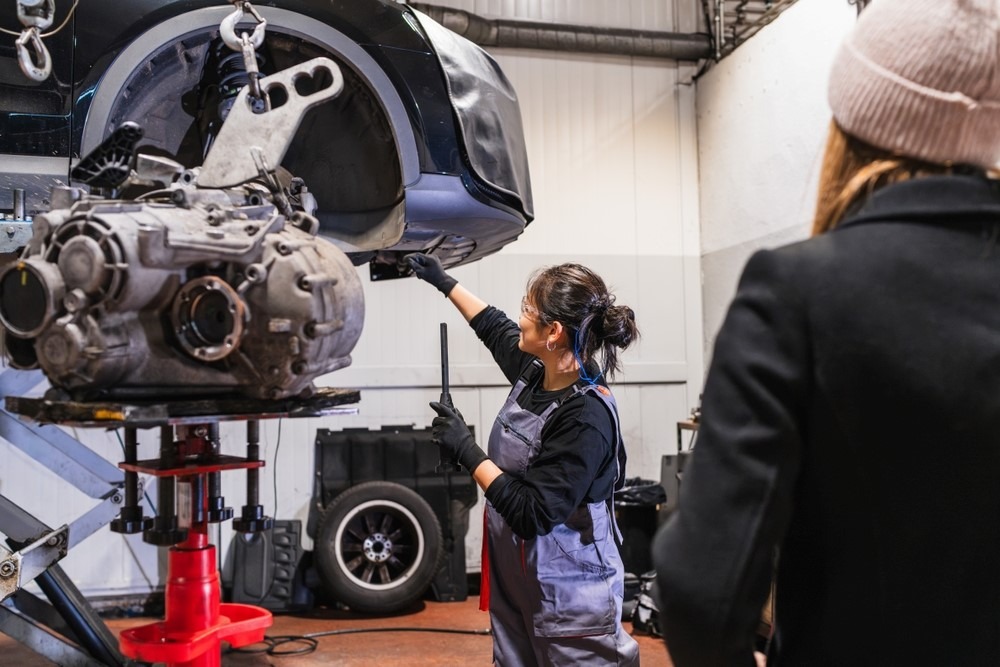
Is it legal to change the engine of a car in Spain?
You are surely asking yourself this question, and for your peace of mind, yes, it is completely legal to do so.
According to Royal Decree 866/2010 of 2 July, which regulates the processing of vehicle modifications in Spain, changes to the engine of our vehicle can be made as long as we comply with the regulations and requirements established by law.
In other words, you can swap the car's engine for a more powerful one or buy second-hand engines, as long as you comply with the requirements set out by law.
What should you do if you change the car's engine?
Whether you have replaced it with a new one or with a second-hand engine, after making the changes you must homologate the new engine and the parts used.
And what does this mean? It is a process in which it is verified that the engine meets the emissions and safety standards required by the authorities. In addition, it will be necessary to pass the Vehicle Technical Inspection (ITV) after having carried out the engine swap.
ITV professionals will evaluate the engine to determine whether it meets the technical specifications and safety regulations. If the vehicle passes successfully, you will be able to enjoy driving with your new engine without any problems.
What is the cost of homologating an engine swap?
It will depend on the Autonomous Community. But to give you an idea, it can be between 150 and 400 euros, which includes both the certificate of conformity and the ITV fees.
Of course, this is nothing more than an estimate, as other costs may arise, such as the calibration of specific engine components.
How much does it cost to change the car's engine?
Again, we are in a situation where many factors come into play, among which the type of engine, the car model and, of course, whether the swap will be carried out by a workshop or by yourself stand out.
If we are talking about a new engine, it can cost you anywhere from 2,000 euros to over 10,000 euros. The alternative would be to opt for buying a second-hand engine from a trusted source, one that has been inspected and guarantees that it works correctly and complies with all regulations so that you can continue using it.
The other alternative you could consider is changing parts of the engine to repair it or improve its performance. If you do not have much expertise and want to assess what would be best, take the car to your trusted workshop and get advice there. The parts do not have to be new — you can also buy them second-hand and use the savings to invest in the mechanic who will carry out the swap.
What happens if I change the car's engine and do not comply with the regulations?
It does not matter whether you are replacing the old engine with the same one or with a more powerful one. You absolutely must make sure you comply with what the regulations stipulate.
If you fail to comply with the established regulations, you would face legal consequences and a financial fine.
The insurance will not cover the damages
Apart from homologating the engine and passing the ITV, you will have to inform your insurer that you have made the swap.
Otherwise, in the event of an accident, it does not matter that you have everything insured — they will not cover the damages, and even less so if they determine that the engine modification was the cause of the accident.
Minor infringement
How high could the fine be? Well, if it is a minor infringement — meaning the engine swap was detected during the ITV and the engine is not properly homologated — the fine will range between 100 and 500 euros.
Serious infringement
Have you been driving with an extremely modified engine? Did you commit a minor infringement and have you reoffended nonetheless? If so, fines can exceed 1,000 euros, reaching considerable amounts depending on the severity of the infringement.
How can you be sure you are complying with the regulations and avoid problems?
To summarize, you can carry out the engine swap as long as you follow the appropriate channels to homologate it and avoid problems.
What is your best option? Having the swap carried out at a trusted workshop, as well as buying the new engine from a shop or salvage yard that provides you with all the documentation required for its homologation.
If during the ITV inspection you have been told there is a problem, do not take risks and resolve them before driving the car. Remember that not only could you face financial penalties, but you could also put your life and the lives of those travelling with you at risk if the engine fails.