



Do you need to know what type of engine your car has? Yes—it’s more important than you might think, especially when it comes to maintaining or optimizing your vehicle.
Now you’re probably wondering, “How can I tell what engine my car has?” Don’t worry—we’ll show you how to find out!
Why is it so important to know what engine your car has?
You may never have given much thought to your car’s engine type, but it’s important to know the model so you can:
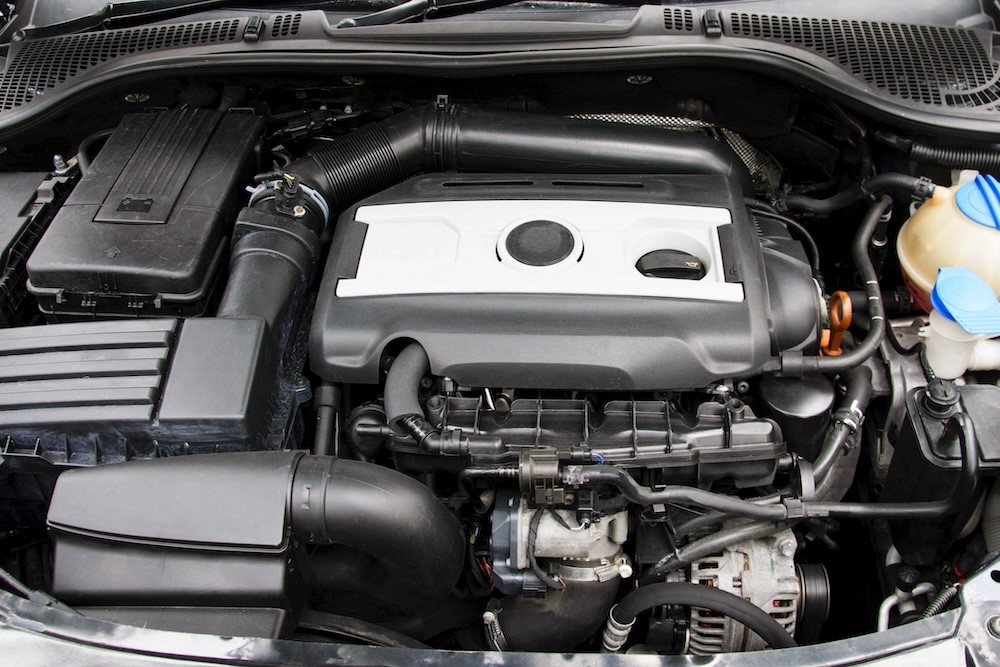
Maintenance and repairs
Each engine uses specific parts, so when you replace damaged or worn ones, you’ll need parts that are compatible with that engine.
Likewise, some engines require a specific type of oil and other fluids. Using the wrong ones could affect their performance and service life. Above all, if you’re buying a used engine, you’ll need to make sure it’s the same as the one your car had.
Fuel type and consumption
Your car’s engine won’t consume the same amount of fuel as every other type: a subcompact and a mini car, for example, are different. The engine type also determines the vehicle’s power and performance.
Making modifications and upgrades
If you’re planning to modify or upgrade the engine, you need to know its type to find the right parts. Otherwise, you could end up installing incompatible parts or ones that reduce its power.
How can you find out what engine your car has?
Now let’s look at the different ways you can find out what engine your car has:
Can you find out from the license plate number?
You could try, but it only works sometimes. Here’s why: You can find information about your car’s engine using its license plate number, but this method isn’t always reliable.
Here’s why: To get this information, you need to visit the DGT website. Enter your car’s license plate number and it will give you details such as the make and model. Sometimes it will even tell you the engine type. But not always, so it’s best to try other options too.
Find out what engine your car has using its technical specifications sheet
The easiest and most reliable approach is to check the technical specifications sheet—that is, the Technical Inspection Card (ITV), which lists your vehicle’s technical specifications.
There are two types:
Older technical specifications sheet
On the older green documents, the engine code is in the engine section, in the right-hand column under “Type.”
Look for the combination of letters and numbers that identifies the specific type of engine your vehicle uses.
Newer technical specifications sheet
On the newer blue documents, the engine code is in section P.5, and the engine manufacturer is listed just below it in section P.5.1.
As with the previous method, look for the combination of letters and numbers that identifies your car’s engine code.
Finding out your car’s engine type using the VIN
A third option—and one of the most reliable ways to find out what engine your car has, along with other information—is the VIN.
This is the Vehicle Identification Number, or VIN, which lets us look up detailed information about a vehicle, including its engine specifications.

You can find it in the following places:
- The vehicle’s technical specifications sheet.
- The lower corner of the windshield on the driver’s side.
- The driver’s door frame.
The VIN alone won’t show us the exact engine code, but it does contain information that could help us identify it. How? By using what are known as VIN decoders.
These online tools help you interpret the information in the code, showing you the engine type, displacement and power output. Some manufacturers even offer this tool on their own websites.
Owner’s manual
If you bought your vehicle from a dealership, you were probably given a manual explaining its various features. You can also find the engine code and the type of engine your car uses in that booklet.
Can a mechanic find out?
Of course. Although it’s useful to have that information yourself, when you take your vehicle to a repair shop for service or repairs, the mechanic can identify the engine model using the VIN or the technical specifications sheet.
Take the opportunity to write down all the information and keep it handy for the future. You never know when you might need it.