


It is possible that during an inspection of the engine's cooling system we notice that the vehicle's coolant has taken on a milky or brown color. If you have noticed this, it is clear that oil has mixed with the coolant water.
When the leak is recent, the shine of an oily liquid floating on top of the coolant can be noticed. This tells us that a fault has already occurred and that some oil has seeped in, mixing with the coolant. If we notice this, WE ARE STILL IN TIME! This fault must be repaired as soon as possible.
CAUSES OF OIL APPEARING IN THE COOLANT
There can be several reasons why oil may mix with coolant. The two main causes are a blown head gasket or a faulty oil cooler.
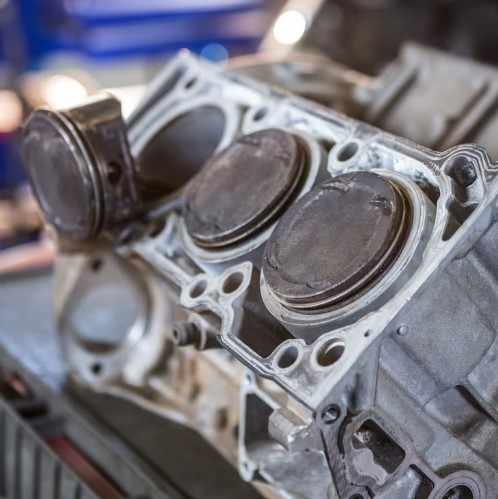
This fault presents several symptoms, such as engine overheating, loss of power, or engine oil contamination, to name a few. When the engine head gasket blows, the coolant can leak from the engine, preventing its proper cooling.
If the gasket is damaged, oil and other residues from the combustion process can also seep through and mix with the coolant, which means it cannot cool down properly due to the action of the radiator, also causing engine overheating.
Symptoms that indicate whether the fault comes from the head gasket are:
- Engine overheating. The normal operating temperature of the engine is between 80 and 90°. If the temperature warning light comes on, it may be indicating that the head gasket has blown and a coolant leak has occurred, preventing proper cooling.
- Loss of power. When the gasket is damaged, power is lost, as combustion gases can escape from the cylinder and the power generated by that specific cylinder is lost. When we press the accelerator, this loss will be noticeable and it is possible to hear a metallic whistling sound.
- Engine oil contamination. Contaminated engine oil is a symptom that the head gasket has blown. If we find whitish sludge under the engine oil cap or on the engine oil dipstick, this confirms such contamination.
- White smoke with a sweet smell. If white smoke with a sweet smell comes out of the exhaust pipe, this indicates a leak of coolant and/or engine oil from the engine cylinders. With the heat, this evaporates and exits through the exhaust pipe. In these cases, we must stop the car and call the tow truck immediately.
- Oil or coolant leaks from the engine. If we have detected oil or coolant leaks under the vehicle's engine, we are facing another symptom of a blown gasket. In this case, the engine oil warning light will come on to alert us to the problem.
- Air bubbles inside the radiator. If we detect bubbles in the radiator, even when the temperature is low, it is a clear symptom of a blown gasket. It is not possible to detect this symptom until we have to top up the coolant because its level is low. It is worth remembering that, if we have to top up the coolant regularly, we most likely have a leak that must be repaired to prevent the engine from overheating.
- Dirty spark plugs. If we see whitish residue on the spark plugs, especially near the electrodes, the problem may come from the engine head gasket. It is a symptom that is difficult to detect but can give us a clear clue about this fault if we notice it when changing or cleaning the spark plugs.
When it is confirmed that the head gasket is in poor condition, it will be necessary to replace the head gasket. Afterwards, the cooling system is fully drained and the water pump and radiator are inspected to ensure they have not been damaged. Driving with this fault is never recommended.
If we have to keep driving with a blown head gasket, it is advisable to do so very slowly to the workshop. The damage to the engine from being exposed to high temperatures can be very serious.
Symptoms that indicate whether the fault comes from the oil cooler:

This component is not present in all petrol engine vehicles; however, turbocharged engines usually include it. If the oil cooler deteriorates and leaks develop, it is very likely that the oil will end up mixing with the coolant.
· When the head gasket blows, a decrease in engine power is noticed. This does not happen when the leaks come from the oil cooler, as it does not affect engine performance.
· If the problem is an oil cooler leak, it is much easier and more economical to repair the fault. Likewise, the cooling system must be drained and then refilled.
These are the two main causes by which oil can enter the cooling circuit. Also, in cars with automatic transmission, another case can occur: leaks from the transmission cooler.
Symptoms that indicate whether the fault comes from the transmission cooler:
In vehicles with a transmission fluid cooler, cracks can develop between the radiator and this cooler. When this happens, the transmission fluid can mix with the coolant. This gives the coolant a foamy, pinkish color.
The worst possible case is that the coolant reaches the transmission. When this happens, significant damage to the transmission can occur, which may make its replacement necessary.