




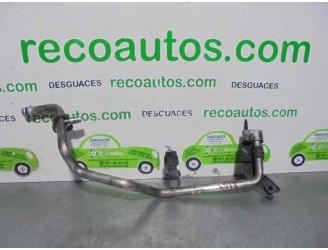


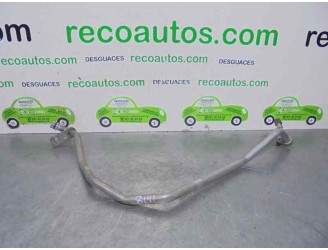


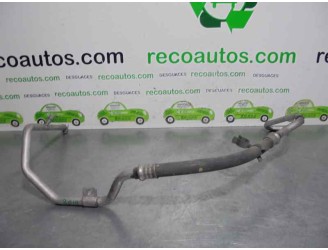
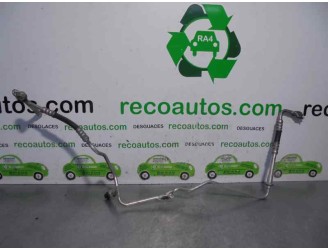


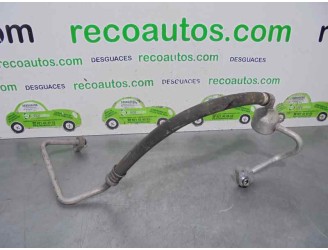


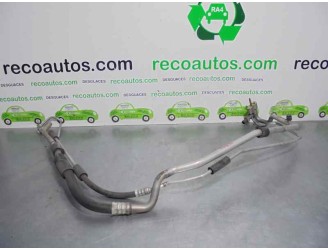


Restore your car's air conditioning with replacement pipes!
Air conditioning pipes are much more than simple conduits — they are the vital channels that allow the refrigerant gas flowing through the system to absorb heat from the cabin and dissipate it to the outside.
Are yours damaged and no longer working? Don't worry, because you can buy used car air conditioning pipes at Recoautos at an unbeatable price!
Frequently asked questions
This component is also known as hoses or ducts, and it transports the refrigerant (in gas or liquid form) between the different components of the air conditioning system, such as the compressor, condenser, filter, and evaporator.
Without this component, the refrigerant would not be able to complete its heat exchange cycle.
They are generally made from a combination of synthetic rubber and metal (aluminum or steel). The rubber sections provide flexibility to absorb engine vibrations, while the metal sections offer rigidity and strength in areas of high pressure or temperature. They are designed to withstand extreme pressures and temperatures, as well as the corrosive effects of refrigerant.
They are generally made from a combination of synthetic rubber and metal (aluminum or steel).
The rubber sections provide flexibility to absorb engine vibrations, while the metal sections offer rigidity and strength in areas of high pressure or temperature.
They are designed to withstand extreme pressures and temperatures, as well as the corrosive effects of refrigerant.
The most common types of damage are:
- Leaks caused by corrosion, material wear, cracks, or impacts.
- Blockages from the build-up of debris, dirt, or moisture that restricts refrigerant flow.
- Wear of the seals, known as O-rings, that connect the hoses.
- Ruptures caused by a strong impact or excessive tension.
Here is what you can expect:
- The air conditioning will stop cooling or will cool very little.
- When you turn on the air conditioning, the cabin will fill with a sweet or chemical smell.
- You will notice oil stains around the connections or along the hoses.
- When you switch on the air conditioning, you will hear a whistling sound caused by high-pressure gas leaking.
As a general rule, when there is a crack or significant damage to the rubber section, it is recommended to fully replace the affected hose or pipe section.
The cost can vary depending on the specific section of hose that needs replacing, as some sections are easier to work with than others.
Generally speaking, the price is not usually very high. However, if there have been leaks that have damaged other components, the overall repair cost will be greater.
As mentioned in the previous question, it depends on which section needs replacing. Those that are easily accessible are quite straightforward and can be replaced in just a few minutes.
Other sections, however, require removing additional parts, which makes the job more complicated.
At Recoautos we have an extensive catalogue of spare parts for all types of car air conditioning systems.
We stock parts for most major brands, so if you are looking to replace yours and save a significant amount of money, we recommend shopping at our auto recycler. And with the money you save, you can even pay a mechanic to fit it for you!
No, this is not a part that requires any specific preventive maintenance, beyond routine visual inspections.