



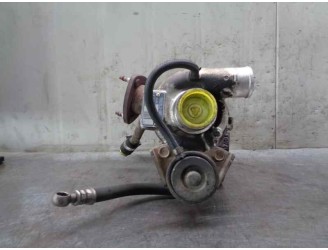


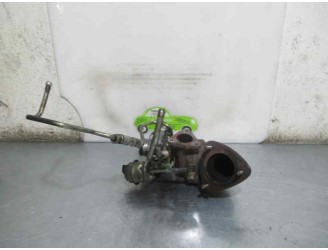

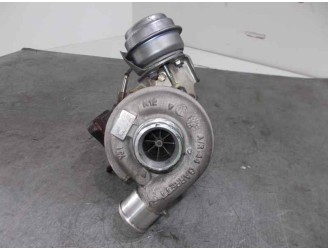

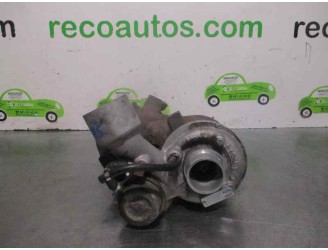

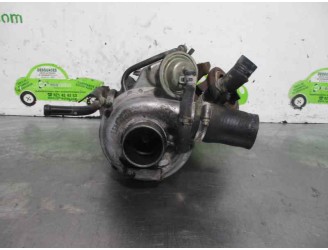

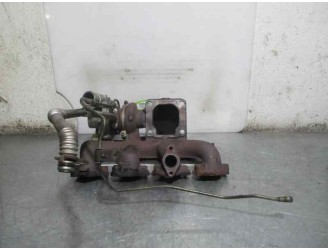
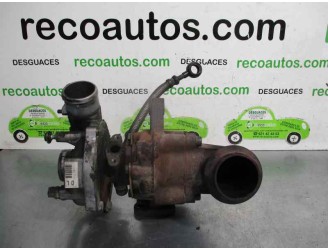
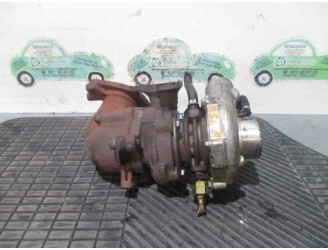



Recupera la potencia y eficiencia de tu coche a un coste reducido con nuestros turbocompresores de segunda mano
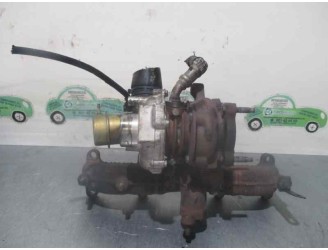
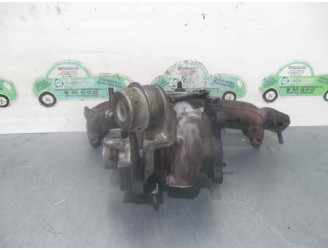
El turbocompresor de un coche, a veces abreviado como turbo, es un componente mecánico esencial en la mayoría de los motores de combustión interna modernos, tanto en los coches de gasolina como diésel. Si esta pieza falla, o está compensando a darte problemas, es el momento de cambiarlo. Y, por desgracia, no es una pieza barata… ¡Salvo que compres un turbocompresor de segunda mano en nuestro desguace! Piezas usadas, ¡en perfecto estado para seguir disfrutando de tu coche por muchos años!
Frequently asked questions
A turbocharger is a forced induction device used in motor vehicles that harnesses the energy from exhaust gases to force more air into the engine's cylinders, allowing more fuel to be burned. This results in greater engine power and efficiency.
This part consists of two turbines connected by a shaft:
- The exhaust turbine, which uses the energy from exhaust gases to spin at over 100,000 rpm.
- The intake compressor, which is connected to the same shaft and draws in outside air to compress it.
That compressed air is then injected into the engine, allowing more fuel to be burned efficiently, delivering greater power and performance while driving. Since its lubrication depends on the engine oil, its condition is directly tied to how well you maintain your vehicle.
There are several symptoms that may indicate a damaged turbo, such as:
- Loss of power while driving, especially when accelerating. This could mean the turbo is not generating the necessary air pressure, causing the car to enter a protection mode.
- If there is a leak in the seals or the bearings are worn, you may notice blue or white smoke coming from the unit.
- It may produce unusual noises, such as a high-pitched whistle indicating a pressure leak in the hoses or the turbo itself. You might also hear a howling sound, which suggests serious play in the turbine shaft.
- If you notice the oil level dropping significantly with no visible leaks, the turbo may be drawing oil into the intake system.
There are indeed, and here is why:
- The operating temperature of a petrol turbocharger is higher than that of a diesel turbo.
- Turbochargers for petrol engines are built with more heat-resistant materials, while diesel ones are focused on efficiency at low rpm.
- A diesel turbocharger has a slower response than a petrol one.
So it is important to understand that a turbocharger is designed for a specific engine. You cannot fit a petrol turbo in a diesel car, and the same applies the other way around.
No, because electric cars do not use a combustion engine and therefore produce no exhaust gases. In that context, the equivalent component is known as an electric turbo, which is also used in high-end petrol or hybrid engines to eliminate turbo lag (response delay) by using a small electric motor.
Above all, pay attention to the part reference or code, as it must be compatible with your car's engine. It is important to know that car turbochargers are not universal, so you cannot use one from a different make — and in many cases, not even from the same one. Here is why:
- The shape of the turbine housing and compressor housing are designed to fit precisely within the exhaust system.
- The turbocharger must have oil inlet and return ports (and sometimes coolant ports) that match the connections on your car's engine.
- Each engine is designed to handle a maximum boost pressure. Fitting a turbo that delivers too much pressure could cause serious engine damage.
- Variable geometry vanes are electronically calibrated to the exact opening and closing position that the engine requires for its rpm range.
- The size of the turbines determines how quickly the turbo spools up and how much air it can move. This must match the engine's displacement and intended rev range.
- Turbochargers are designed for a specific fuel type — either diesel or petrol — and must be specific to that fuel source.
It is a mechanism that allows the angle of the vanes (blades) inside the turbine to be adjusted. By changing the angle, the speed at which exhaust gases strike the turbine is controlled. This enables the turbo to operate efficiently both at low rpm (to eliminate lag) and at high rpm. It is very common in diesel engines.
First and foremost, every part you find in our catalogue has been previously tested and inspected to ensure it works correctly and is in perfect condition. Secondly, there is the savings factor. Replacing a turbocharger is not cheap — it requires professional labour and the part itself is not inexpensive. However, by purchasing a used turbocharger, the money you save can go straight towards your mechanic's labour costs.